
5 Minutes with University of London Press

We spent five minutes with Paula Kennedy, Head of Publishing at University of London Press and current Co-Vice Chair of OIPA!
Tell us about University of London Press
The University of London Press is part of the School of Advanced Study (SAS) at the University of London, a national centre for advancing the humanities. Our aim is to ‘open up humanities research’ – not just through publishing most of our new books open access, but also in terms of our experimental publishing models, the diverse and global audiences we aim to reach, and the collaborations we develop with both academic and non-academic partners.
Our support through SAS and its special funding from Research England means that we have a unique responsibility in service of the arts and humanities more broadly. An important strand of our work in this area is the support we offer researchers of all career stages in aspects of publishing, through our annual programme of training sessions (on topics like open access, peer review and marketing academic books, and our new ‘Open Access in the Humanities’ free course on SAS’s RESHAPED module.
Our publishing programme includes several series developed in partnership with the renowned humanities Institutes based at SAS, as well as external partners like the Royal Historical Society. We’ve also focused on growing our open access books programme in the last few years, and our OA books have now reached over one million downloads.
Alongside our publishing and training activity, we also collaborate with partners across the higher education, cultural and publishing sectors, including the EvenUP collective of UK/Irish university presses working together on Equity, Diversity and Inclusivity practices.
What challenges have you had to overcome in setting up the University of London Press?
The University of London Press originally dates back to 1910 and has published under a variety of names and imprints over its long history. The ‘University of London Press’ brand was reacquired in 2019, and in the last few years we’ve undergone a significant transformation and embarked on a new strategy which supports SAS’s work as a national centre for the humanities and offers a new vision and approach for humanities publishing. As a result, we’ve had to make several significant changes: to our processes and policies, a rebrand for the Press and a new website, amongst other things. These have been major pieces of work which created challenges for our small team, particularly when balanced against the ‘business as usual’ work of the Press and publishing our existing programme. These changes also involved internal conversations with departments across the university and difficult decisions to end some long-running series. But we’ve been really proud of how working on these changes and navigating the challenges has helped us come together as a team. We now have very clear, shared goals for the Press and it’s created new opportunities for our commissioning, such as digital humanities.
What has been the response from academics at your institution and beyond?
We’re very lucky to have had the support of many colleagues at the School of Advanced Study and the wider University of London, some of whom have published or developed ideas for new series with us. It’s been lovely seeing positive feedback on our new books and wider initiatives, including praise for our open peer review process for Living with Machines and appreciation for our free training sessions.
Just recently, when we posted details of our new ‘Digital Cultural Heritage’ series on Bluesky, the historian Professor Margot Finn (@eicathomefinn.bsky.social) responded saying ‘At a time when leaders arguably aren’t showing much evidence of leadership on the academic research front, it’s important to recognise the staff and organisations that are championing, supporting and delivering innovative, high-quality research. Kudos to @uolpress.bsky.social.’ This kind of feedback from the subject communities we work closely with means a lot to us!
What is your proudest achievement so far?
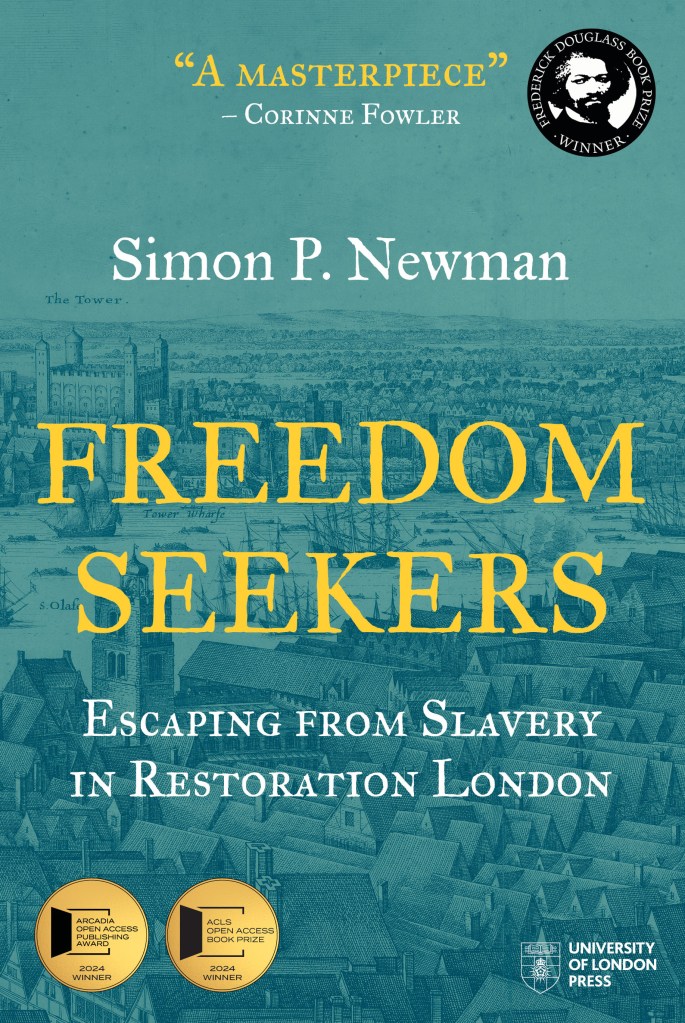
Our proudest achievement so far would probably be either reaching one million downloads of our open access titles, or publishing the award-winning book Freedom Seekers, which won the ACLS Open Access Book Prize and Arcadia Open Access Publishing Award, an award that highlights exceptional scholarship made available through open access. The book won in the History category, and the judges felt that the book offered ‘a new view into slavery’s deeply embedded history in Britain and the Atlantic world’, giving a fresh perspective on the experiences of enslaved people seeking freedom in London. Freedom Seekers was also the joint winner of the 2023 Frederick Douglass Book Prize from Yale University’s Gilder Lehrman Center for the Study of Slavery, Resistance, and Abolition, and it’s been brilliant to see the positive reception of such an important book.
We also recently received a 100% ASPIRE gold-rated score for the quality of our accessibility statement – independently assessed by the ASPIRE verification service – and were told that it’s a rare occurrence to achieve a gold rated, 100% ASPIRE score at the first attempt. There has been a huge effort by many members of the team to enable us to improve the accessibility of all of our content, so I’m really proud of the progress we’ve made and this external recognition of it.
Can you share your future publishing plans?
We’ve recently launched several new open access book series which we’re really excited about. These include a new series – Humanities Futures – which will advocate powerfully for the value of the humanities and their vital role in tackling contemporary society’s most pressing issues, our History & Policy Shorts series, which just published its first title, Digital Cultural Heritage which launches in 2026 and Reimagining Law and Justice, which has its the second and third titles publishing next year. Personally, it’s really motivating to work for a Press whose remit is to support and advocate for humanities research and researchers, and we’ve got some excellent books lined up for the next few years!
We’ll also continue to explore sustainable funding models which offer alternatives to Book Processing Charges (BPCs), which are a real challenge for most humanities researchers and in the current financial context for HE. We’ve been successful in securing additional financial support for our publishing directly from libraries through Jisc’s Open Access Community Framework and the Knowledge Unlatched scheme, and also through our inclusion in the Open Book Collective, which does such important work in linking non-profit open access publishers with libraries globally keen to support non-BPC models.
We also plan to continue experimenting with publishing our content in innovative ways. In 2023 we launched our own instance of Manifold, a digital scholarly publishing platform that supports the dissemination of interactive, media-rich monographs. The platform offers benefits for both readers and authors, and allows us to offer an enhanced ‘read online’ feature for our open access titles. It also enables us to offer innovative publishing models for our books which showcase the benefits and opportunities of publishing humanities research open access, including an open peer review process for early material from our forthcoming book, Living with Machines, which will be published with a whole range of ancillary material alongside the print text. We have more experimental projects planned from 2026 and beyond, so watch this space!
Why does open institutional publishing matter?
Having come from a commercial publishing background, I feel that the current academic publishing system is broken – and I think that’s becoming more obvious in the current financial HE crisis. Sales of monographs have been declining for all publishers for many years, and good books just aren’t achieving the reach they would have through traditional, closed access models. There are so many evidenced benefits of open access publishing – increases in downloads and citations, much better global reach, the ability to reach new, non-academic audiences for research – and it’s clear that open access should be the direction of travel for us all. But commercial models of open access – based around APCs and BPCs – just aren’t workable for most researchers or their universities. Institutional publishers offer a valuable alternative to commercial models, often offering lower or no BPCs or APCs to publish, a more tailored and supportive publishing experience for authors, expertise in open access publishing and dissemination, and support for the host university’s strategy and international reach. Institutional publishing also creates a valuable space for collaboration – both within universities (between colleagues in libraries, publishing operations, academics and research services offices, for example) and between universities, through shared networks and infrastructure.
Why did you join OIPA?
We’re one of the founding members of OIPA, having been involved since the start of its development, and I’m proud to be one of its current Co-Vice Chairs. My background is largely in commercial academic publishing, and when I joined the University of London Press, I really benefitted from being able to draw on advice from ex-colleagues across production, marketing and editorial at other publishers. A few of us working at smaller presses felt that there was a real gap in this kind of network of support for people working on open access publishing within universities. This kind of publishing might be done by an individual librarian tasked with running an open access journal, or a very small team supporting a small university press. OIPA has created a vital new national infrastructure which university-based publishers of all shapes and sizes can benefit from in different ways – whether by using its informal forum for advice, meeting counterparts in similar roles at other institutional presses, or helping with OIPA’s broader work on advocacy and skills training. As a Press, we’re committed to collaboration and exploring equitable, sustainable open access publishing models, and our work supporting OIPA is a key part of this.
Where can we find out more about University of London Press?
There’s lots of information on the University of London Press website, including a number of free training courses on our Training Hub. We regularly update our blog and you can view the downloads for our books there too. We’re also on LinkedIn and Bluesky, so follow us to find out more!
 Open Institutional Publishing Association
Leave a comment